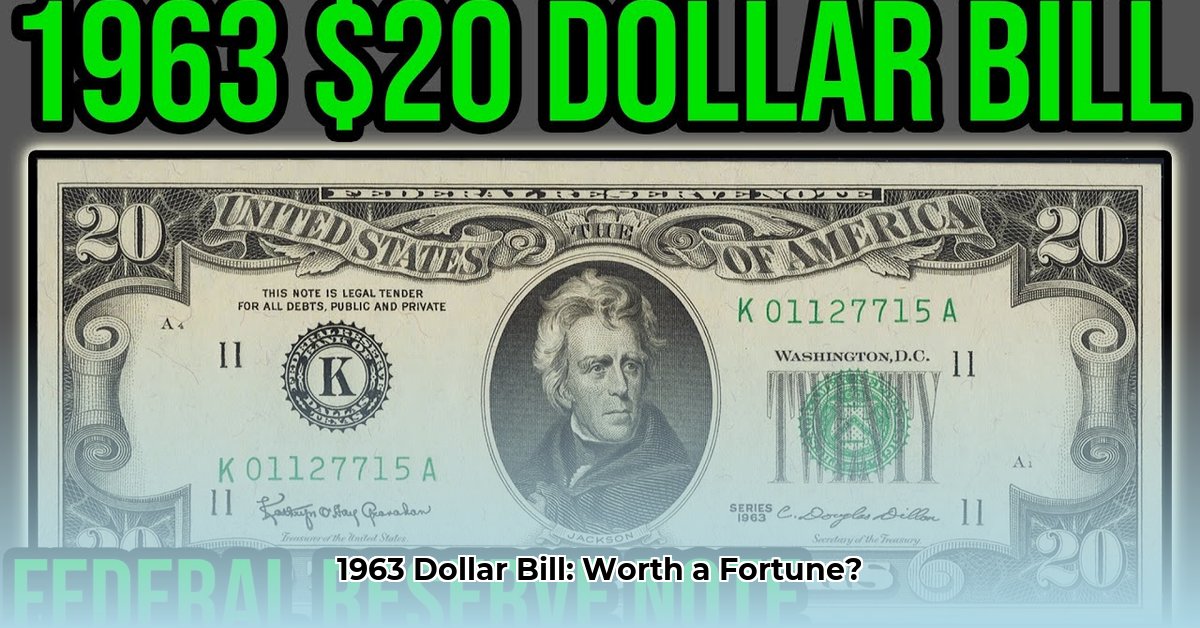
1963 Dollar Bill Value: Unlocking the Secrets of Your Old Bill
Have you discovered a 1963 dollar bill tucked away and are curious about its worth? This guide will help you determine its value, whether you're a seasoned collector or simply intrigued by its potential worth. Understanding the factors that influence its value is key to uncovering its true potential.
Condition: The Cornerstone of Value
A 1963 dollar bill's condition is the most significant factor determining its value. Just like a pristine classic car is worth more than a damaged one, a perfectly preserved bill commands a higher price. Numismatists (coin and currency experts) use grading scales, such as the Sheldon Scale (ranging from Poor to Gem Uncirculated (Gem Unc)), to assess condition. A Gem Unc bill, practically perfect, fetches the highest price. Even a well-circulated bill retains some value.
Key Features That Enhance Value
Beyond overall condition, specific features significantly impact a 1963 dollar bill's worth:
Star Notes: Reprint bills replacing ones with printing errors, identified by a small star (*) next to the serial number, are rarer and more valuable.
Fancy Serial Numbers: Repeating digits or visually appealing patterns in the serial number increase collector interest and value. The more unique the pattern, the higher the price.
Federal Reserve Bank Code: While not a major factor, the Federal Reserve Bank code (e.g., A1, G7) printed on the bill indicates its origin. Certain codes are rarer than others, potentially adding value.
How to Determine Your 1963 Dollar Bill's Value: A Step-by-Step Guide
Ready to assess your 1963 dollar bill's worth? Follow these steps:
Assess Condition: Carefully examine your bill for damage (tears, creases, stains). Use online coin grading guides or consult a professional numismatist for valuable bills. Accurate grading is crucial for determining value.
Identify Special Features: Check for a star (*) near the serial number (star note) and analyze the serial number for repeating digits or patterns (fancy serial number).
Note the Federal Reserve Bank Code: Locate the code on the bill and record it.
Use Online Resources: Several websites specialize in pricing collectible currency, offering value ranges based on condition and features. Remember that these are estimates; the actual value may vary.
Consider Professional Appraisal: For potentially high-value bills, a professional numismatist can provide a precise, objective assessment.
Why Valuing a 1963 Dollar Bill Can Be Complex
Determining the precise value can be challenging due to several factors:
Limited Data Availability: Online databases might have incomplete sales data for certain variations.
Unique Bill Characteristics: Slight differences in condition or features beyond the standard criteria significantly impact desirability and price.
Market Fluctuations: The value of collectibles, including currency, constantly changes due to shifts in supply and demand.
The Ever-Evolving World of Collectible Currency
The value of your 1963 dollar bill will likely fluctuate over time. Collector interest and market trends influence value. A highly sought-after bill today might be less desirable in the future. The bill's condition and unique features remain paramount to long-term value.
Key Factors at a Glance
This table summarizes the factors influencing a 1963 dollar bill's value:
| Factor | Impact on Value |
|---|---|
| Condition | Higher grade (better condition) = higher value. |
| Star Note | Significantly increases value. |
| Fancy Serial Number | Increases value based on pattern complexity. |
| Federal Reserve Bank Code | May slightly increase value, but not always decisive. |
Remember, accurate valuation involves careful consideration of multiple factors. With thorough research and potentially professional guidance, you can uncover the true worth of your historical treasure.